Submission digitals versus agency digitals: het verschil
Ontdek waarom eenvoudige aanmeldfoto's en door een agency gemaakte digitals een ander doel hebben en wat je moet insturen.
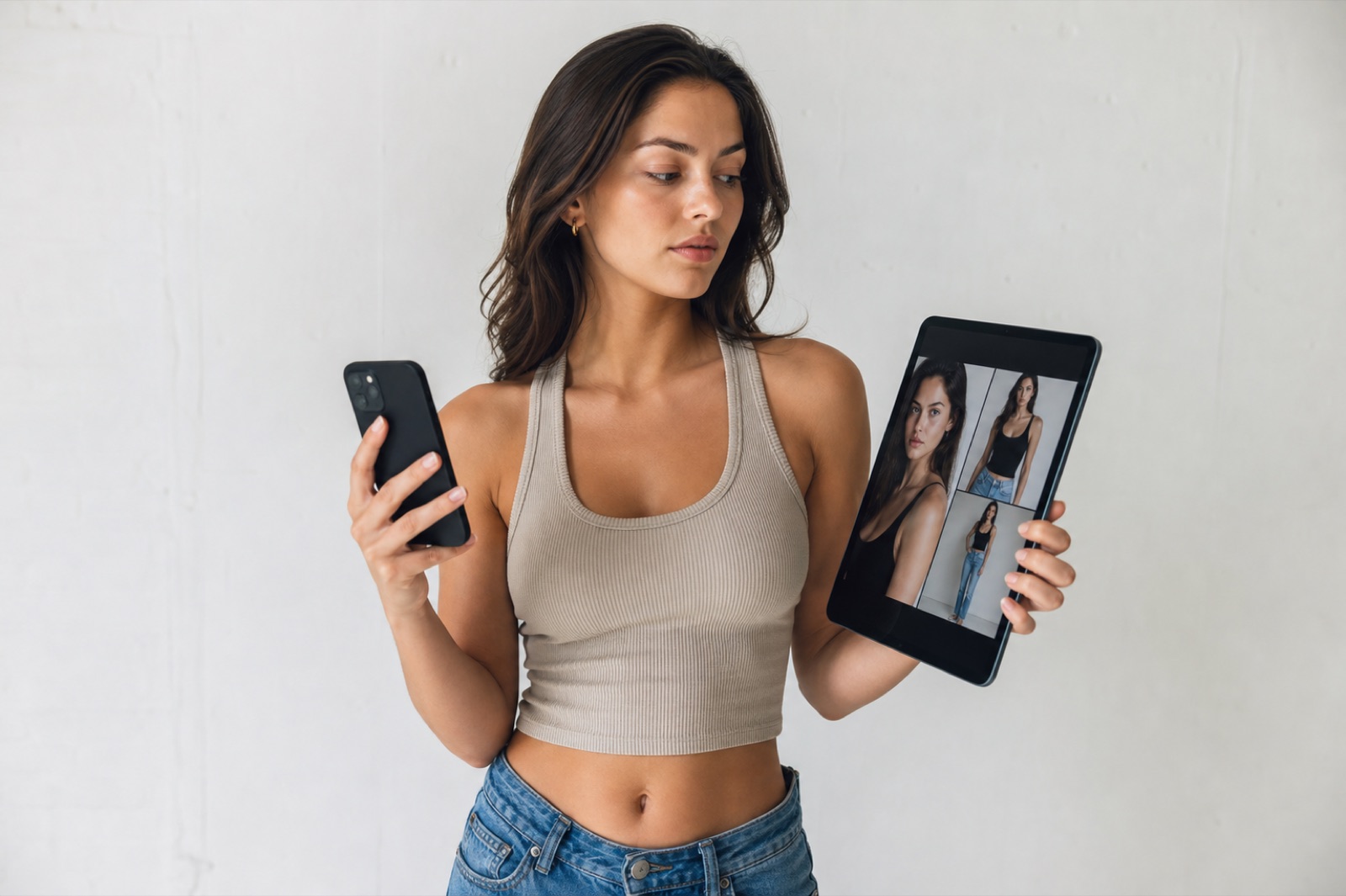
Niet elke foto die “digital” heet is hetzelfde
Wanneer een modeling agency bij een aanmelding om digitals vraagt, bedoelt het meestal eenvoudige, actuele foto's die tonen hoe je er vandaag uitziet. Na ondertekening kan een agency een gecontroleerde sessie organiseren voor het roster en professionele gebruik. Beide sets horen natuurlijk te blijven, maar doel en productie verschillen.
Wie dit verschil niet kent, geeft als beginner soms geld uit dat niet nodig was.
Kort antwoord
Submission digitals kun je meestal maken met een recente telefoon, effen achtergrond en gelijkmatig daglicht. Ze zijn bedoeld voor een eerlijke eerste beoordeling.
Agency digitals worden soms in een studio of agency gemaakt met vaste belichting, uitsnede en styling. Ze zorgen voor een consistente professionele presentatie.
Volg bij een aanmelding altijd de exacte instructies. Vervang gevraagde simpele beelden niet door geretoucheerde headshots of creatieve portfoliofoto's.
Wat hoort in een submission-set?
- Rechte headshot
- Linker- en rechterprofiel
- Driekwartportret
- Totaalbeeld van voren
- Zijaanzicht
- Achteraanzicht indien gevraagd
- Lachend beeld indien gevraagd
Draag eenvoudige aansluitende kleding zonder grote logo's. Gebruik weinig of geen make-up, natuurlijk haar en geen filters. Houd de camera recht en voldoende ver weg om groothoekvervorming te voorkomen.
Onze stapsgewijze digitals-gids behandelt licht, poses en telefooninstellingen.
Wat voegen agency digitals toe?
Een agency kan voor het hele roster dezelfde technische standaard gebruiken:
- Vaste camera-afstand en lens
- Consistente belichting en kleur
- Exacte uitsneden en bestandsgroottes
- Kleding passend bij de markt
- Korte beweging- of videofragmenten
- Bestandsnamen voor het interne systeem
Professionele productie betekent geen zware retouching. Goede agency digitals tonen nog steeds echte huid, verhoudingen, haar en je actuele look.
Moet je vóór je aanmelding een fotograaf betalen?
Meestal niet. Met een telefoon, raamlicht en een helper kun je duidelijke submission digitals maken. Als je toch een fotograaf inschakelt, beoordeel dit als een dienst en niet als garantie. Vraag totaalprijs, voorbeelden, aantal bestanden, leverdatum en mate van bewerking.
Wees voorzichtig wanneer een zogenaamd bureau één dure fotograaf verplicht stelt vóór het je überhaupt beoordeelt. Gebruik dan onze legitimiteitscheck.
Vijf verschillen
Doel: submission is eerste beoordeling; agency is lopende professionele presentatie.
Maker: submission maak je zelf; agency wordt gecontroleerd geproduceerd.
Styling: submission gebruikt neutrale basics; agency kan marktgerichter zijn.
Techniek: submission moet helder en eerlijk zijn; agency vraagt extra consistentie.
Moment: submission is vóór vertegenwoordiging; agency wordt na ondertekening en bij veranderingen vernieuwd.
Veelgemaakte fouten
- Beautyportretten sturen in plaats van gevraagde hoeken
- Huid gladmaken of lichaamsvormen aanpassen
- Oude foto's gebruiken na een kapsel- of maatverandering
- Te dicht bij een groothoeklens staan
- Beelden uit verschillende maanden mengen
- Betalen omdat iemand acceptatie belooft
- Elke portfoliofoto een digital noemen
Wat doe je nu?
Ben je nog niet getekend, maak dan een eenvoudige set volgens de instructies van ieder bureau. Ben je vertegenwoordigd, vraag dan hoe vaak de agency nieuwe digitals wil en wie ze produceert.
De beste digitals zijn niet de duurste. Ze zijn actueel, eerlijk en geschikt voor de ontvanger.